Back to works

Streamlining space scheduling with a bespoke $0 SaaS

How a simple complaint about 1-hour booking blocks led to designing a complete room management ecosystem - and why sometimes the best solutions emerge from accumulated frustrations.

My RoleUX Designer & Developer
TechnologiesGoogle Apps Script, HTML/CSS/JS
TeamSolo project with stakeholder input
Users1200 startups, D3 staff, and guests

window conference room digital signage

The Story

Every great design project has an origin story. This one begins in the summer of 2022, during my internship as an Alan Sheperd Resident Consultant at District 3. The post-pandemic world had left many innovation hubs struggling with hybrid work patterns, and D3 was no exception.

"We need better tech solutions to get people back in the office," was the brief. The existing room booking system - built by a D3 startup that had since pivoted away from facilities management - was abandoned and broken. People were booking rooms by Slack messages, emails, and sticky notes.

What started as a simple fix would evolve over two years into something much larger: a complete room management ecosystem that demonstrates how the best design solutions often emerge not from grand visions, but from accumulated frustrations and iterative problem-solving.
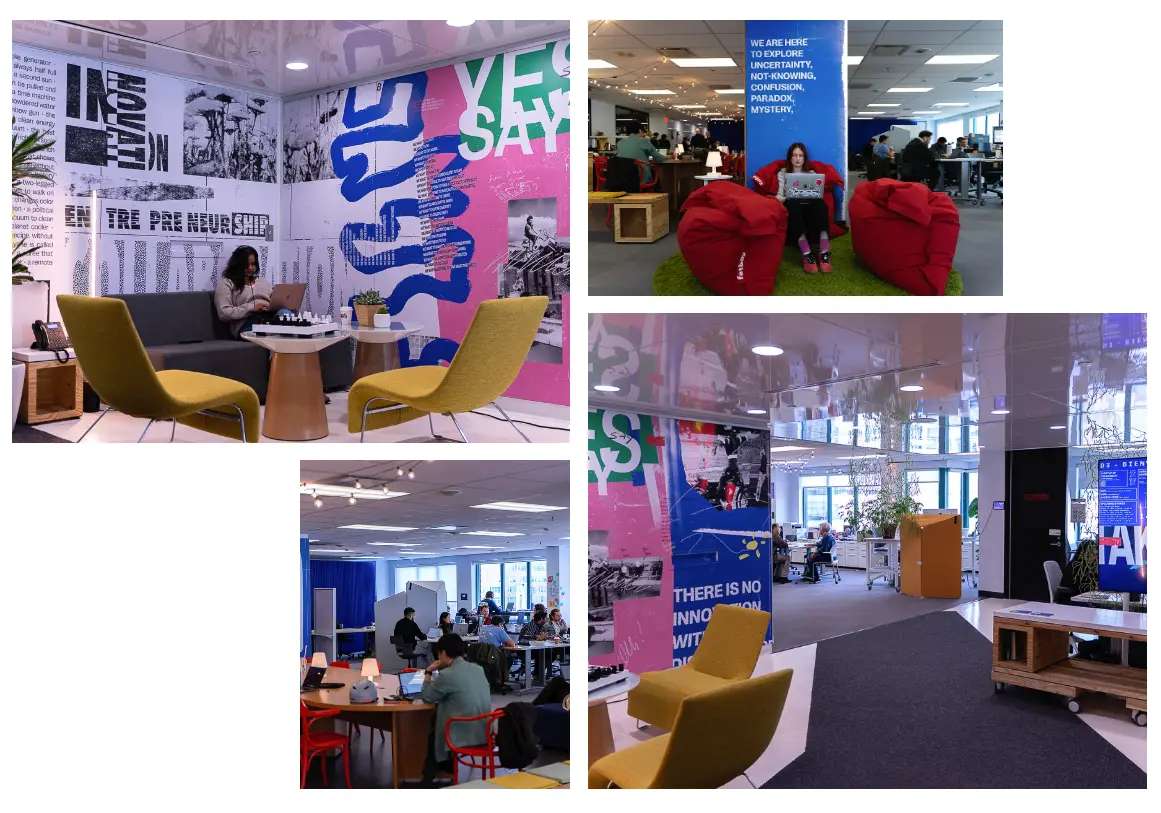
District 3 innovation hub office space

district 3 hub

The Journey

The Spark

Summer 2022

During my Alan Sheperd internship, I proposed better tech solutions to encourage return-to-office. The existing booking system from a D3 startup had been abandoned when they pivoted.

Market Research

Fall 2022

After joining D3 as a Data, Systems, & Automations Coordinator I evaluated six commercial platforms (Deskfound, Envoy, Robin, etc.) - all failed due to cost constraints or feature limitations for our non-profit budget and specific needs.

Version 1: The Hack

Winter 2023

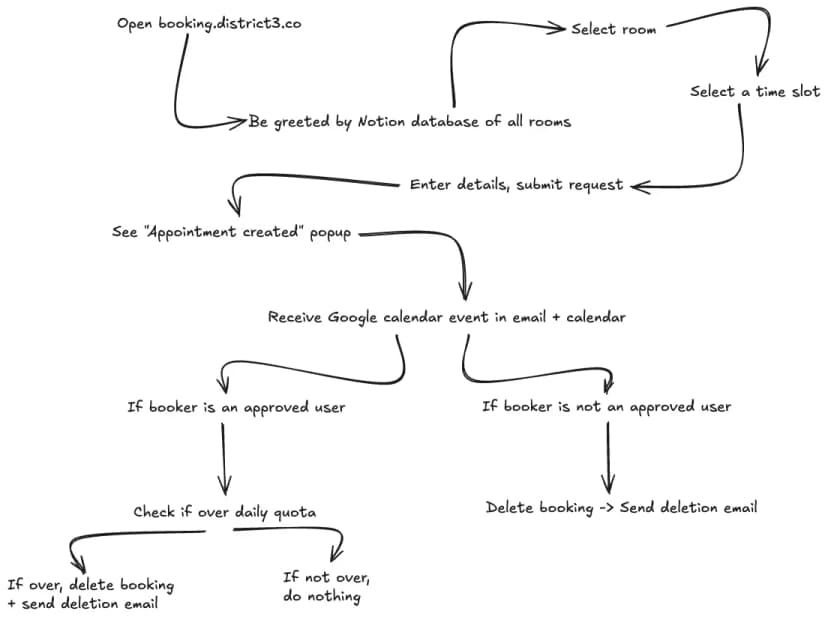
After growing beyond the capabilities of our previous platform, I built an MVP using Google Apps Script, Google Calendar Appointment Schedules, a URL redirect, and Notion pages. Functional as a stopgap but flawed.

New Opportunities

Winter 2024

Seeing opportunities where I could improve D3's digital user experience, my manager and I increased my responsibilities under a new role as D3's User Experience & Systems Designer

The Breaking Point

Summer 2024

Charlie Gedeon, former D3 employee and cofounder of Pragmatics Studio, expressed frustration with 1-hour-only slots. This critique, combined with my Paris design education, sparked the complete V2 redesign.

Version 2: The System

Fall 2024

Complete UX overhaul with user research, cohesive design system, and three integrated interfaces.

Version 1: Problematic User Flow

V1's broken user flow

v1 broken flow

The Catalyst

"I just want to book a 15-minute call slot. Why do I have to reserve an entire hour?"

- Charlie Gedeon, former D3er and cofounder of Pragmatics Studio

That single complaint in summer 2024 was the catalyst for everything that followed. Charlie's frustration wasn't just about booking duration - it represented a fundamental disconnect between how the system worked and how people actually wanted to use the space.

Fresh from studying interaction design in Paris and armed with new perspectives on user-centered design, I realized V1's problems ran deeper than technical limitations. The entire user experience was broken. It was time for a complete rethink.

Design Process & Research

Understanding the Problem

I conducted interviews with D3's space team (Ivona Bossert and Andrea Betts) and multiple startup founders to understand their booking behaviors and pain points.

Flexibility Issues

Users needed 15-30 minute meetings, not just 1-hour blocks

Feedback Failures

Delayed email denials created confusion and no-shows

Visibility Gaps

No way to see real-time availability without opening the app

Design Philosophy

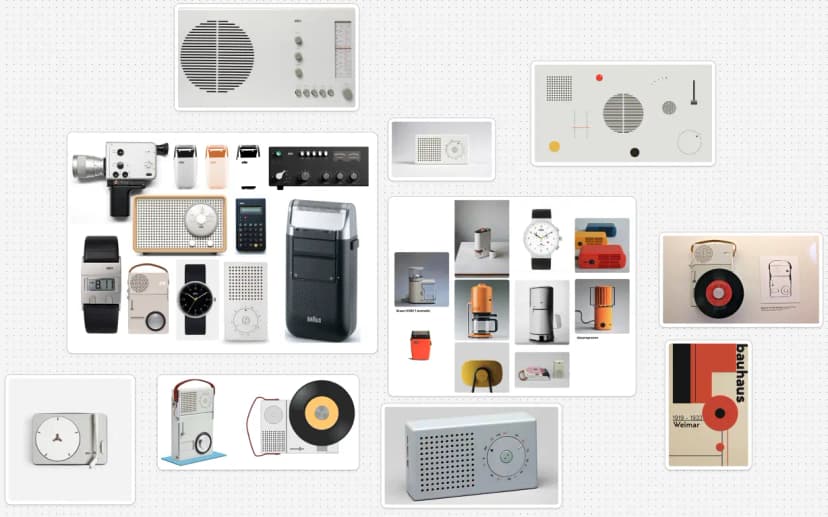
The challenge was balancing D3's "brash and busy" visual identity with functional interface needs. My solution: feature the brand graphics prominently while keeping UI interactions minimal, fast, and inspired by Bauhaus principles - form follows function.

I drew inspiration from Dieter Rams' design philosophy and the biophilic interior design work being done by Andrea Betts and Ivona Bossert.

Design mood board with Bauhaus inspiration

design principles

Interface Design Decisions

Strategic Color Usage

Color was used strategically throughout the system. The traffic light status indicators (green/orange/red) were chosen for zero training time - universally understood across cultures.

traffic light system

Green - Available

Room free for booking

Orange - Check-in Period

10 mins before booking starts

Red - Booked

Currently in use

Familiar Interaction Patterns

Click-and-drag selection leverages existing mental models from calendar applications, allowing precise start/end time selection - directly addressing Charlie's original frustration with fixed time blocks.

After beta testing, I added time dropdown selectors when some users struggled with precise dragging, demonstrating the importance of multiple interaction pathways.

booking interaction

Biophilic Micro-interactions

goldfinches

The American Goldfinch (Montreal's official bird) appears only during check-in/out moments, creating a delightful micro-interaction that connects users to the local environment - supporting the interior design team's biophilia philosophy.

The goldfinch has become D3's pseudo-mascot, but it's used sparingly - only appearing to say thank you at key interaction moments, with an accompanying chirp sound plucked from 10 hours of Goldfinch audio by electroacoustics engineer and former D3er Connor Cook.

The prompt I gave him was "I wanted it to sound like a checkmark". I think he nailed it!

The Three-Interface System

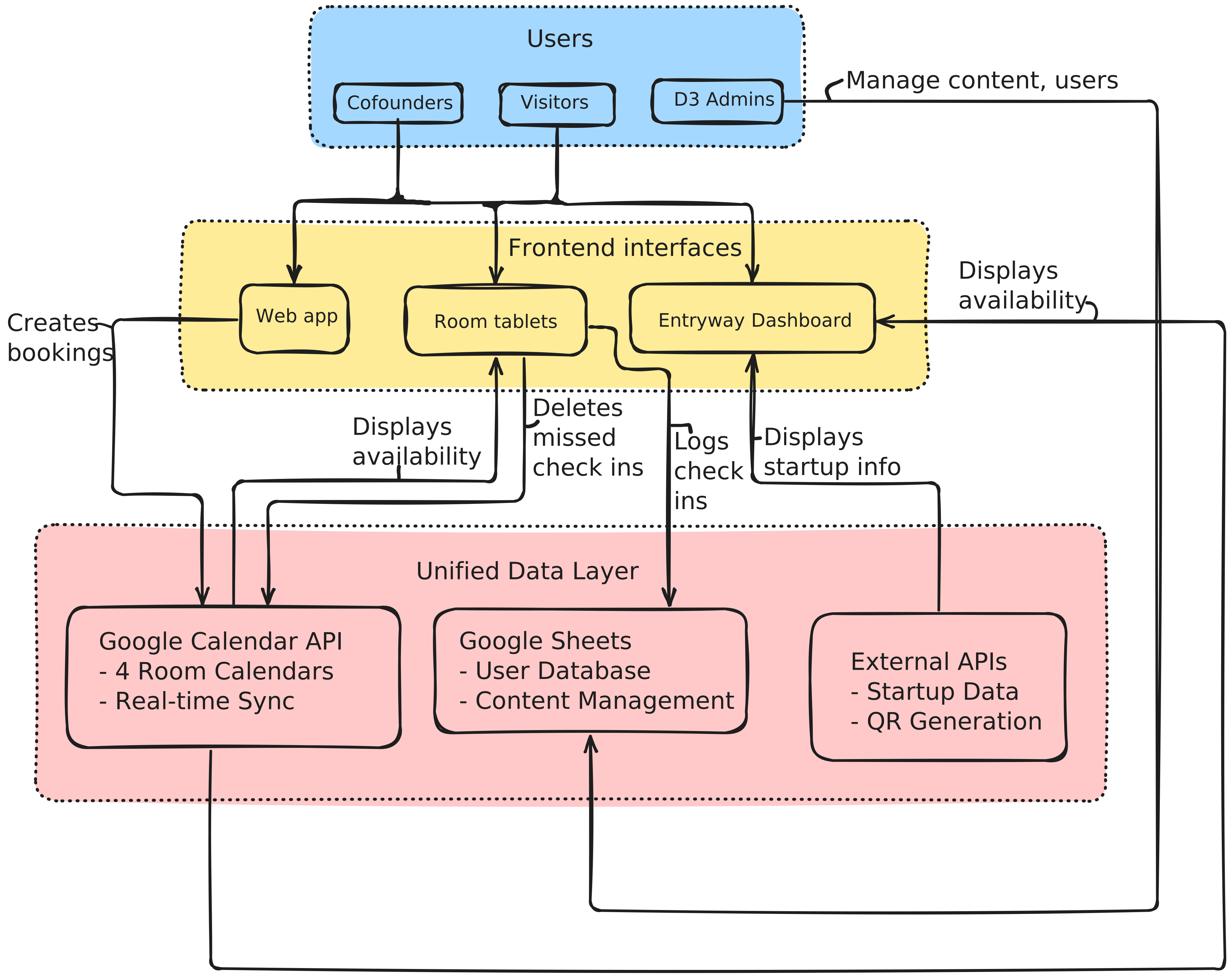
Version 2 isn't just a booking app - it's a cohesive ecosystem of three interfaces that work together to provide comprehensive room management. Each interface serves a specific context while maintaining visual and functional consistency.

Complete system architecture diagram

system overview

Room Tablets

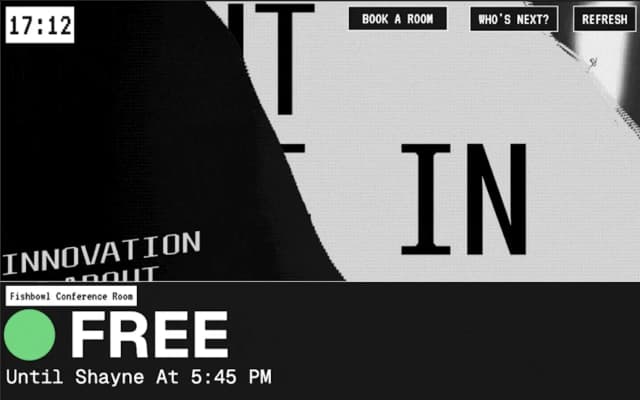
Room tablet FREE state

free state

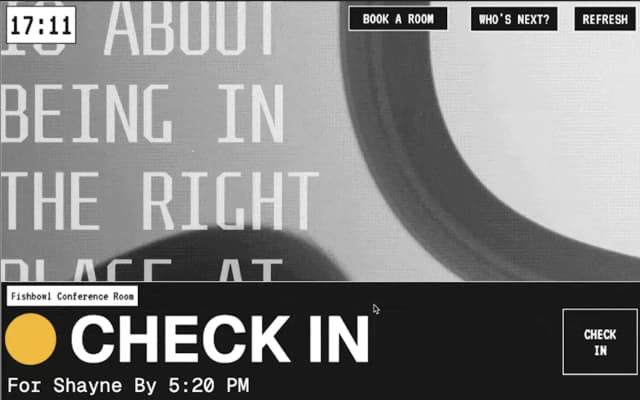
Room tablet CHECK IN state

check in state

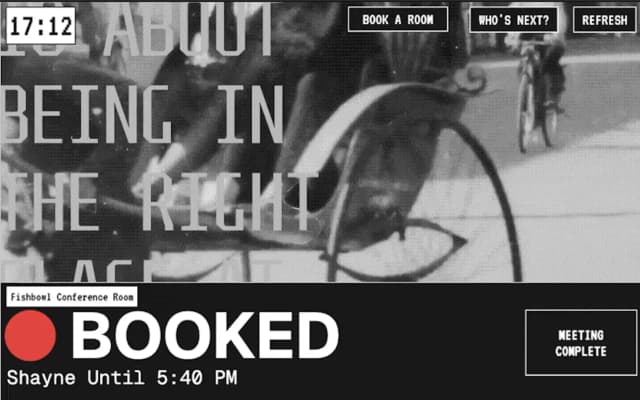
Room tablet BOOKED state

booked state

Key Features

  • Large, high-contrast typography for quick status scanning from a distance
  • Current booking details with precise timing and user identification
  • Single-action check-in/out buttons that appear contextually
  • QR code for mobile booking access without app downloads
  • D3 brand graphics occupy 80% of screen real estate while UI stays minimal

Booking Web App

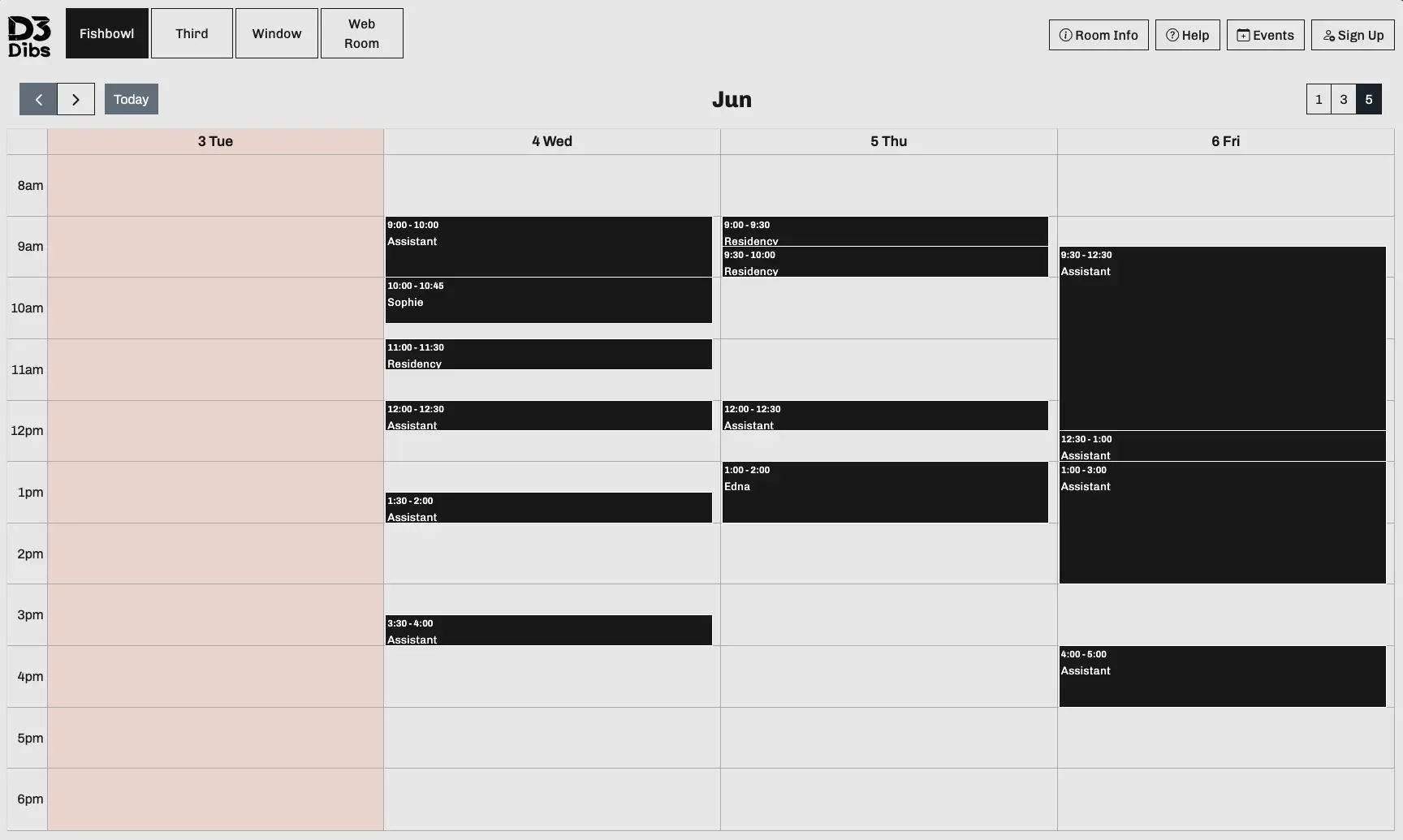
Web app calendar view

calendar view

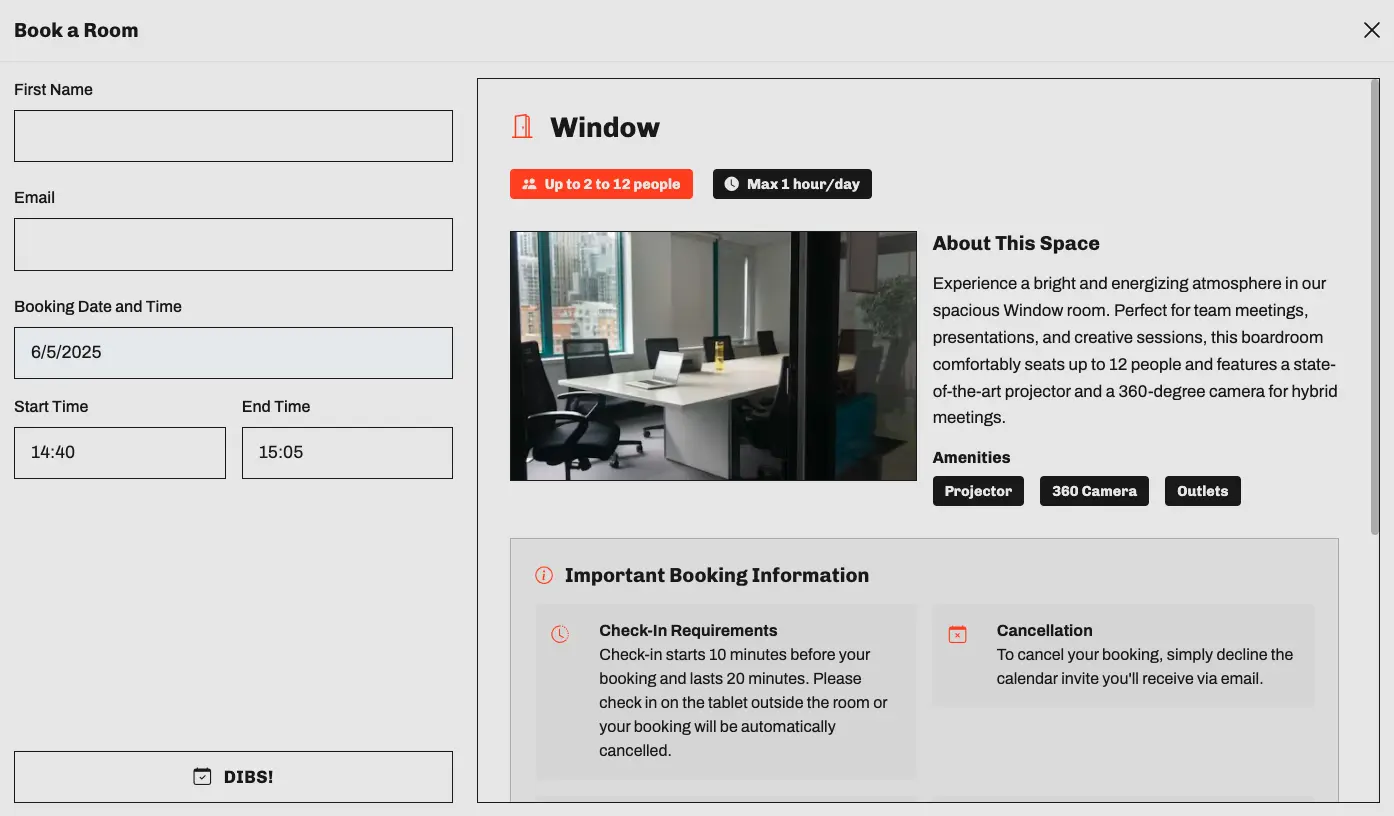
Booking modal interface

booking modal

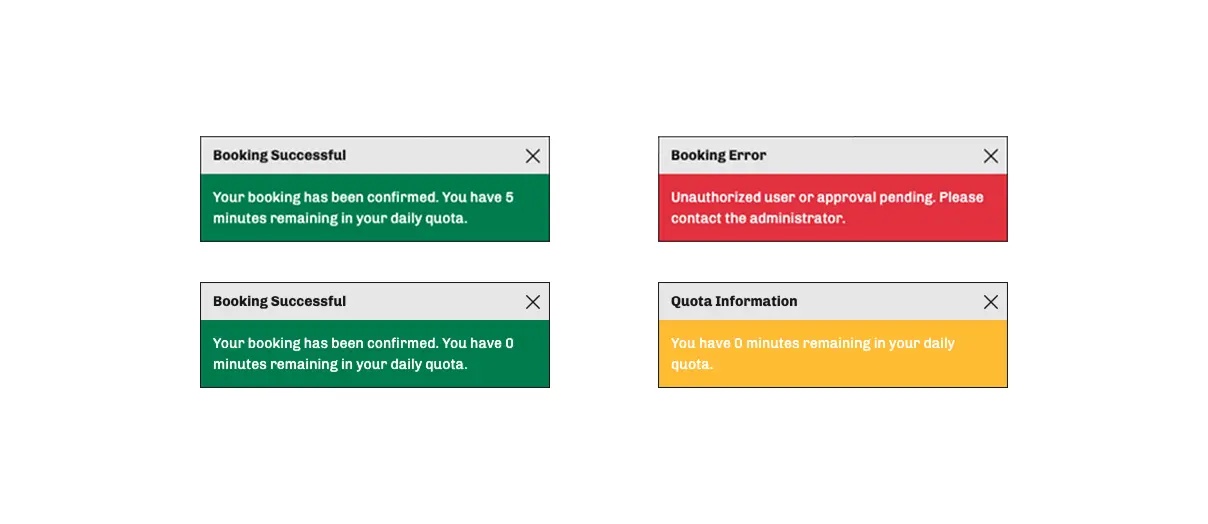
Booking modal interface

feedback toasts

User Experience Improvements

  • Instant feedback system - no more booking confirmations followed by rejection emails
  • Real-time quota tracking with visual feedback on remaining daily bookings
  • Click-and-drag time selection with dropdown backup for precision
  • Room details and amenities clearly displayed before booking
  • Calendar integration showing existing bookings and conflicts

Entryway Dashboard

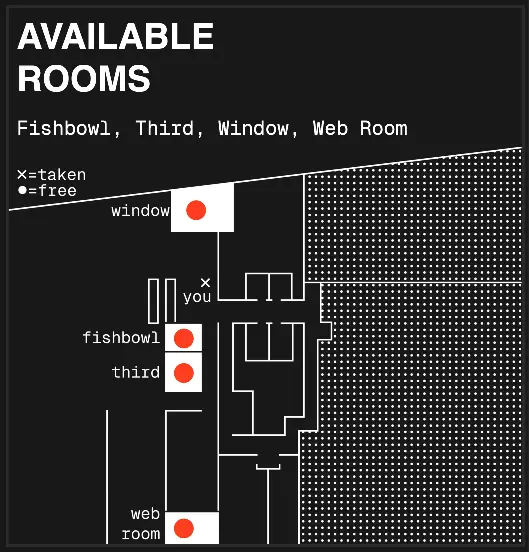
dashboard overview

Realtime conference room availability, shockingly often used!

office map

Information Architecture

  • Message of the day A scrolling marquee message, usually a seasonal greeting
  • Birds-eye office map with realtime room status indicators
  • Startup showcase rotating through member database
  • Essential visitor information (WiFi, events, contact details)
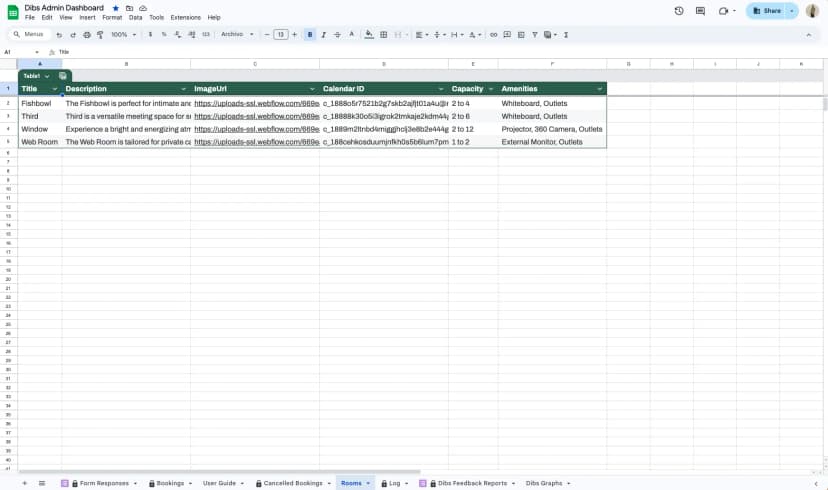
  • Fully admin-configurable content via Google Sheets backend
  • Anti-burn-in rotation that swaps layout positions every 15 minutes
  • Fun easter eggs Dancing staff gifs that bounce around the screen like a classic DVD screensaver

Cohesive System Design

While each interface serves different contexts, they share consistent design principles that create a unified experience across the entire room management ecosystem.

design system

Visual Consistency

  • Typography: Geist Sans/Mono (open-source, supporting D3's "high-tech and open" philosophy)
  • Color Strategy: Minimal black/white palette with strategic orange (#ff420B) accents
  • Brand Integration: D3 graphics occupy prominent real estate while UI stays functional

Functional Consistency

  • Shared Data: All interfaces powered by the same real-time dataset
  • Status Synchronization: Changes in one interface immediately reflect across all others
  • Interaction Patterns: Similar actions behave consistently across contexts

Technical Architecture

  • Google Apps Script: Web app frontend and backend logic
  • Google Calendar API: Real-time booking synchronization
  • Google Sheets: User management and content database
  • HTML/CSS/JavaScript: Custom responsive interfaces
  • Admin Configuration: Non-technical content management via spreadsheet
Google Sheets admin interface

admin backend

Complete User Journey

The redesigned system supports multiple user paths while maintaining consistency. Here's how a typical booking journey unfolds across the three interfaces:

1

Discovery & Booking

User visits district3.co/dibs, sees real-time availability, and books using click-and-drag or dropdown selectors. Instant feedback shows quota usage and confirmation.

2

Arrival & Orientation

Upon entering D3, the entryway dashboard provides office overview, WiFi info, and current events. The birds-eye map shows their booked room location.

3

Check-in & Use

At their room, the tablet shows booking details and check-in button (available 10 minutes before start). The goldfinch animation confirms check-in with a chirp.

4

Completion

User can check out early via tablet "Meeting Complete" button, freeing the room for others. No-shows are automatically cancelled after 20 minutes.

Impact & Validation

Quantitative Results

99.99%
System uptime with error-free interactions
Thousands
Annual savings vs commercial alternatives
0
Training time required for new users

Qualitative Improvements

  • Eliminated booking confusion through instant feedback system
  • Reduced no-shows with clear check-in requirements and timing
  • Improved space utilization through flexible time slots and real-time status
  • Enhanced brand experience matching D3's visual identity
  • Simplified administration with Google Sheets-based content management

Post-Launch Iteration

After launching the beta, I conducted live user testing sessions. The most significant finding was that some users struggled with precise click-and-drag, leading me to add time dropdown selectors in the booking modal. This dual-interaction approach accommodates different user preferences and motor abilities.

Reflection

This project taught me that the best design solutions often emerge from accumulated frustrations rather than grand initial visions. What began as a simple booking system hack evolved into a comprehensive room management ecosystem because I remained open to user feedback and continued iteration.

The tension between D3's vibrant brand identity and functional interface needs became a creative constraint that improved the final design. By giving brand graphics prominent real estate while keeping interactions minimal, we achieved both visual consistency with D3's identity and optimal usability.

Perhaps most importantly, this project demonstrates how custom solutions can outperform commercial alternatives when designed with specific organizational needs in mind. The iterative development process - starting simple and gradually enhancing based on real user feedback - created something truly tailored to D3's unique context and constraints.

The system continues to evolve as new requirements emerge, proving that the best design systems are never truly finished - they grow alongside the organizations and people they serve.

D3 Dibs animated logo

thanks for reading!